

Begin in Hiroshima, then transfer to San’in, north of the Chūgoku mountain range. This area, though lesser known, was instrumental in many key events of Japanese history; now is your time to explore it.
Experience both the famous and hidden sides of western Japan, from its culture to its exquisite food
Visit the post-towns of Sasanami and Akiragi, preserved from their Edo-period days
Stroll around the castle town of Hagi, famed for its pottery, history, and more
Explore the town of Tsuwano, ‘the little Kyōto of San’in’, by both foot and e-bike
Hike up tranquil Mount Mitaki to spectacular views of Hiroshima City
The Chūgoku mountain range, located in western Japan, cleanly splits the region of the same name. To the north of the range is the San’in region, and to the south is San’yō; their names mean ‘the shadowed side of the mountain’ and ‘the sunlit side of the mountain’ respectively. Even today, this description is somewhat apt: the city of Hiroshima is known worldwide for emerging from one of Japan’s darkest moments as a bright beacon of humanity’s resilience, but the area in the shadow of the mountains, though significant in the greater scheme of Japanese history, is lesser known even within the country.
Travel from the lit side of the mountain to the shadowed, uncovering hidden gems that serve as testaments to the ingenuity of mankind, even amidst periods of darkness. Enjoy the rural beauty of San’in, sample western Japan’s culinary specialities, and take the chance to meet and talk to the locals who make this hidden area their home. Your days of exploration will be punctuated with rewarding hikes to mountain temples and castle ruins, and even a guided cycling tour around a charming castle town.
Begin your tour exploring Hiroshima, now a thriving city. Follow the Hagi Ōkan trail bridging the two regions to the castle towns of Hagi and Tsuwano. Hagi, founded by a warlord who had endured a bitter defeat, flourished as a bastion of ceramic art and was instrumental in the Meiji Restoration of the late 19th century. Tsuwano, though hidden deep in a valley, has drawn comparisons to Japan’s old capital of Kyōto thanks to its rich cultural heritage and stunning shrines.
Our Walking Guidebook and Walking Maps will accompany you through the region, taking you through its cuisine, history, landmarks, and more. Meet San’in’s local residents at our fureai points, make connections, and learn more about the ins and outs of the area.
San’in’s stories are yours to discover; will you step into the mountain’s shadows?
(subject to change until the booking has been finalized)
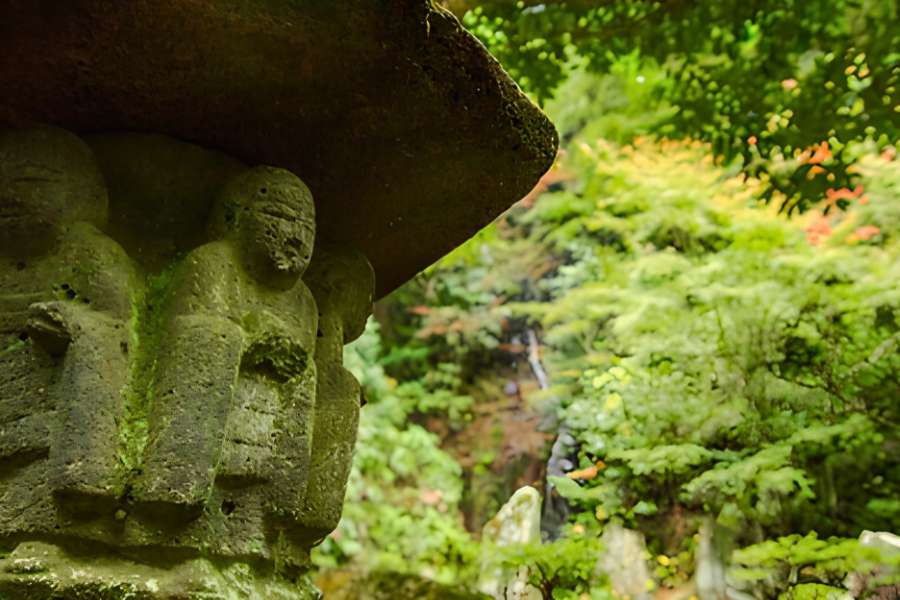
Your tour starts in Hiroshima, with your first destination being a hike up Mount Mitaki, arriving at the summit to views of the city and the Seto Inland Sea. Mitaki-dera Temple, located at the base of the mountain, is a tranquil retreat amidst nature, named for its three waterfalls.
After descending, you will explore Hiroshima’s past and present through its landmarks, including the Shukkei-en Garden, Hiroshima Gokoku Shrine, the Peace Memorial Museum and Park, and more. Dinner is at leisure, but we recommend sampling Hiroshima’s okonomiyaki or its oysters!
Walking distance: 4.9 km / 3.1 mi
Elevation gain: 330 m / 1,080 ft of ascent and descent
Time required: 2.5 hours
Accommodation: Western-style hotel
Transfer to Sasanami, a preserved former post-town on the Hagi Ōkan, an Edo-period highway that served as a key artery connecting the domain to the wider network that spanned the country. This marks your entry to San’in; the trail will take you through forests, rural settlements, and cobblestone paths to Akiragi, another post-town. In the evening, you will arrive in the castle town of Hagi, where you will spend the night.
Walking distance: 9.8 km / 6.1 mi
Elevation gain: 255 m / 835 ft ascent and 450 m / 1,475 ft descent
Time required: 4 hours
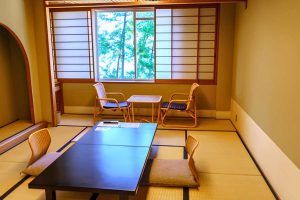
Accommodation: Onsen hotel (hot spring hotel) or onsen ryokan (hot spring inn)
Meals: Breakfast, dinner
Today, you will be able to fully explore Hagi, the seat of power for the Mōri clan. Following a crushing defeat in the 16th century, the shogunate stripped most of the clan’s territories and forced it to relocate to the San’in region. Though isolated, Hagi would grow under the Mōri daimyō’s rule, ultimately becoming a powerful force in Japanese history.
Oku Japan's Exploration Days allow you to structure your day as you wish: your Walking Guidebook offers a number of recommended routes through which you can take in the castle town, including a walk up to Mount Shizuki to the ruins of Hagi Castle. Other highlights include the temple that houses the graveyard of the Mōri clan, as well as the old residences of important samurai families.
Mount Shizuki walk:
Distance: 1.4 km / 0.9 mi
Elevation gain: 140 m / 460 ft ascent and descent
Time required: 1 hour
Accommodation: Onsen hotel (hot spring hotel) or onsen ryokan (hot spring inn)
Meals: Breakfast, dinner
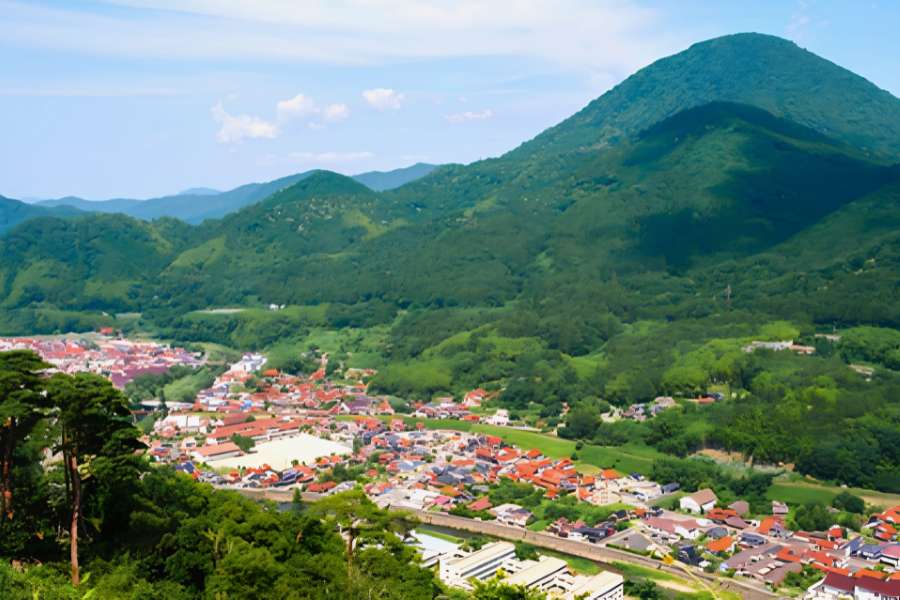
Travel by bus to Tsuwano, a town tucked into a narrow valley and surrounded by mountains, including Mount Reiki, which holds the ruins of Tsuwano Castle. One of Tsuwano's greatest treasures is the Tsuwano Hyakkeizu, or Hundred Views of Tsuwano, a collection of 100 paintings created in the 19th century which portray the vivid life and scenery of the town in the Edo period. In some places, these ‘views’ have been preserved, letting you see the town through an artist’s eyes.
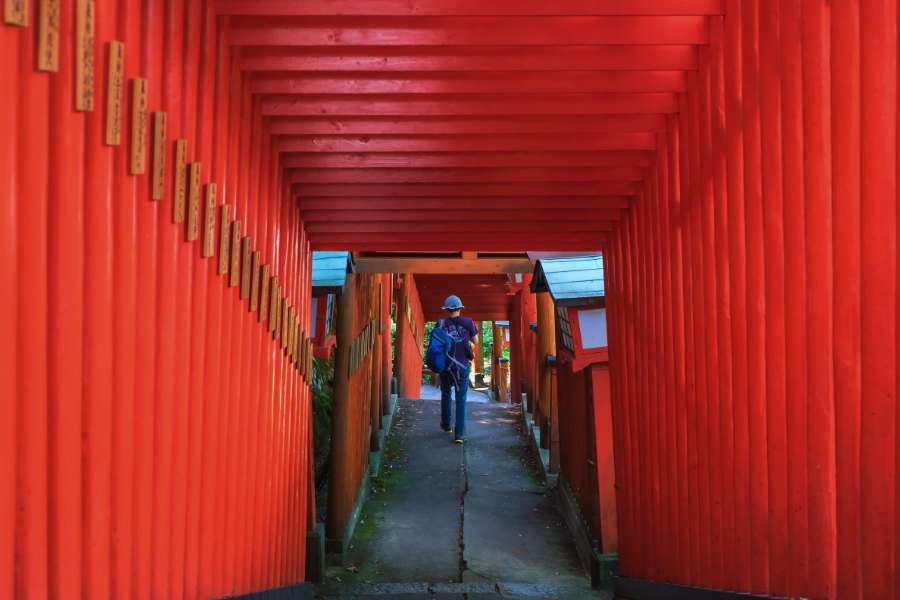
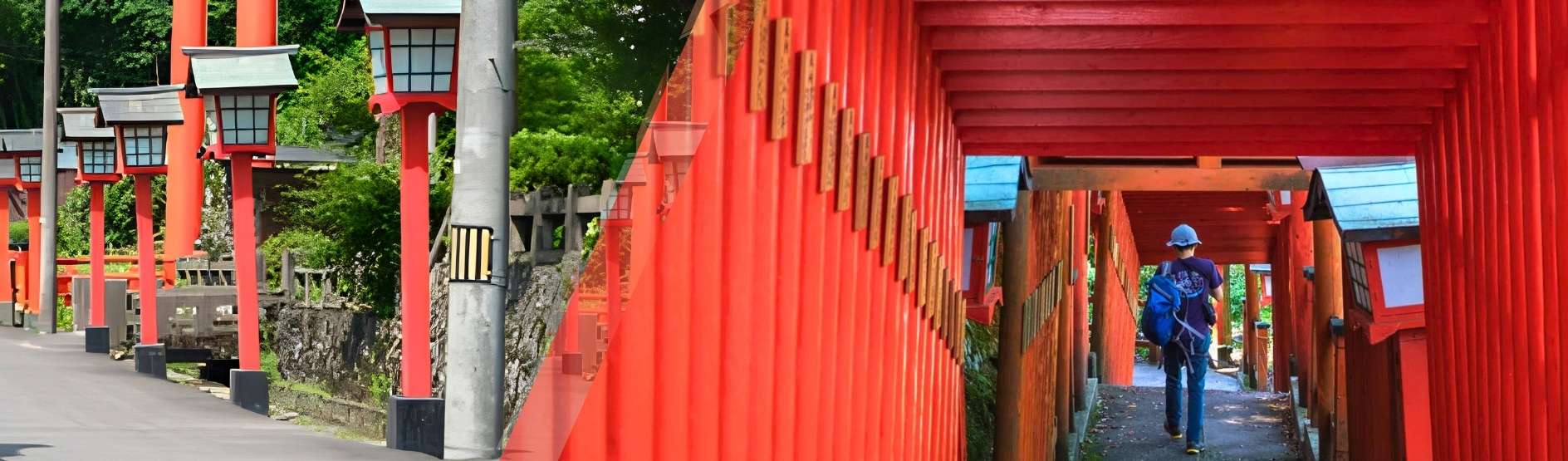
Walk to Tsuwano's castle ruins and to the Taikodani Inari Shrine with its ‘thousand torii gates’ which are similar to those of Kyōto's Fushimi Inari Shrine.
Walking distance: 4 km / 2.5 mi
Elevation gain: 240 m / 785 ft ascent and 255 m / 835 ft descent
Time required: 2 hours
Accommodation: Ryokan (traditional Japanese inn) or minshuku (family-run guesthouse)
Meals: Breakfast, dinner
Hop aboard an e-bike for a guided tour of Tsuwano on this, your last day. A local guide will take you through Tsuwano’s landmarks, shedding additional light on the town’s past, present and future. Once the tour is over, you may further explore Tsuwano before returning to Hiroshima and to the rest of your Japan journey.
Meals: Breakfast