Nakasendo Trail

Nakasendo Trail Tour from Australia | Explore Hidden Gems with the JR West Sanyo Sanin Pass – Hiroshima, Miyajima, Himeji & More | JTB Travel

From Tōkyō, visit the ‘road through the mountains’ once travelled by feudal lords. Stay in traditional country inns, enjoying exquisite regional cuisine and soaking in natural hot springs before ending in Kyōto.

From AUD $7,348 per person, twin share

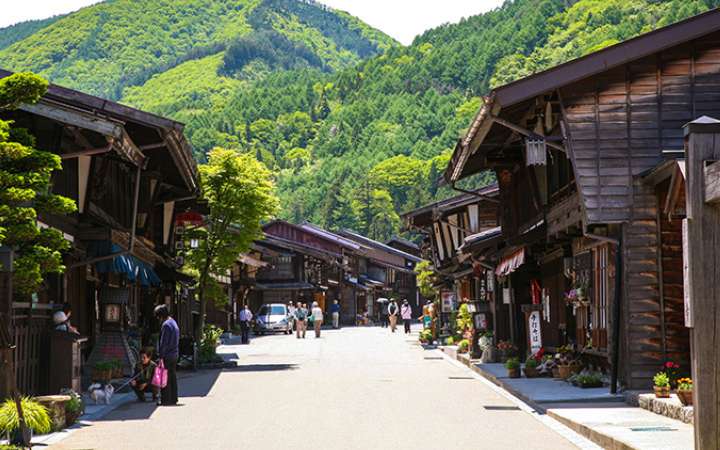
Narai Juku, Traditional wooden buildings lining a historic street in Narai-juku, a preserved Edo-period post town on the Nakasendo Trail in Nagano, Japan, surrounded by lush green
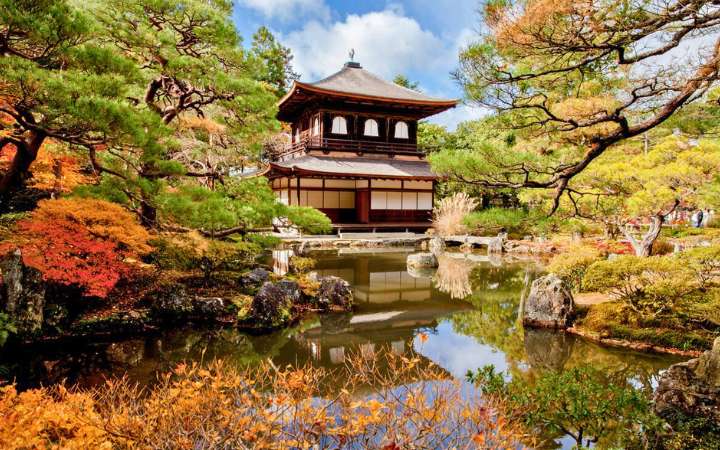
Serene view of Ginkaku-ji Temple (Silver Pavilion) in Kyoto, Japan, surrounded by lush gardens, moss-covered paths, and traditional Zen architecture – a peaceful UNESCO site on the Philosopher’s Path.
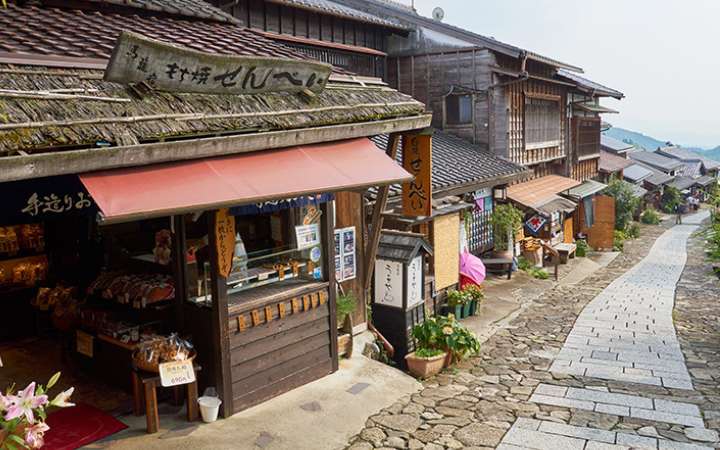
Historic stone-paved street with traditional wooden shops and houses in Tsumago-juku and Magome-juku, a scenic Edo-period post town on the Nakasendo Trail in Japan’s Kiso Valley

Highlights

  • Walk village to village on the loveliest parts of the old Nakasendō Trail
  • Stay in monastery lodgings in the temple town of Mount Kōya
  • Visit the historic imperial capitals of Kyōto, and Nara with its free-roaming deer
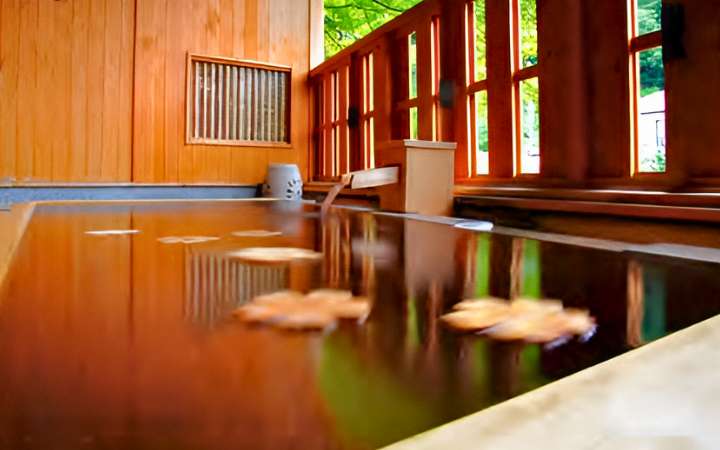
  • Bathe in the thermal waters at a hot spring ryokan
  • See the exquisitely preserved villages of Narai, Tsumago, and Magome
  • Ride the world-famous bullet train

The Nakasendō Trail linked Kyōto to Tōkyō during Japan’s feudal period. It was the ‘road through the mountains’ (as opposed to the Tokaido route, which travelled the Pacific coast) travelled by feudal lords and their retinues, samurai, merchants, and travellers. Along the route were 69 post towns where weary travellers could rest before continuing to the next leg of their journey.

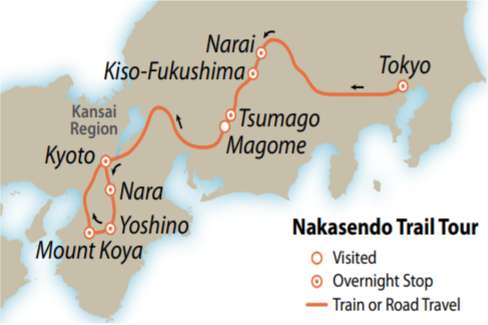
Our journey will start in Tōkyō, known as Edo during Japan’s period of rule by the shōgun. We will then spend four days walking along the Nakasendō. By day we will walk along the ancient route as it passes through beautifully preserved villages, and by evening we will stay in traditional country inns, enjoying exquisite regional cuisine prepared from the freshest ingredients, soaking in natural hot springs, and enjoying the warm hospitality of our hosts.

NOTE :

Tour itineraries are subject to change. We will inform you of any amendments as soon as we become aware of them.


  • Day
  • 1
Meet in Tokyo 
  • Hotel Western-style Hotel
  • Meal Welcome Dinner

Meet at the tour hotel in central Tokyo. There will be a Welcome Dinner at a local restaurant. 

  • Day
  • 2
Sightseeing in Tokyo 
  • Hotel Western-style Hotel
  • Meal Breakfast

Our first full day in Japan will be spent on a walking tour of Tokyo, starting at Nihonbashi (the ‘Japan Bridge’) considered to be the ‘centre of Japan’ and the zero marker point for all Japan’s main roads since the Edo period. Afterwards, we visit Ueno and the Tokyo National Museum to see exhibits illuminating Japan of the Edo era, the heyday of the Nakasendo Trail. (If the Museum is closed because of a national holiday, we will visit the Kappabashi district, famous for selling kitchenware and small plastic models of food used in restaurant displays.) We continue on to the grand Meiji shrine and the fashionable Harajuku district. In the evening your tour guide will be on hand to offer suggestions for restaurants for dinner.

  • Day
  • 3
Hike The Nakasendo Trail from Kiso-Hirasawa to Narai 
  • Walking 2.5 km / 1.6 mi
  • World Heritage site negligible ascent and descent 
  • Walking 1 hour 
  • Traditional Japanese Ryokan Inn Minshuku (Family-run Guesthouse)  
  • Meal Breakfast, Dinner

Our travels through rural Japan begin with a journey from Tokyo to the remote Kiso valley. Over the next three days we will walk from village to village, staying in small, family-run country inns (Ryokan and Minshuku). After the opportunity to enjoy a lunch of buckwheat noodles in the local town of Shiojiri, we walk from Kiso-Hirasawa to Narai. Kiso-Hirasawa is known for its locally-produced lacquerware and there may be a chance to see the craftsmen at work. Stay in Narai, a beautifully-preserved post-town. Our lodgings will be an atmospheric traditional Minshuku. 

  • Day
  • 4
Hike from Narai and Travel to Kiso-Fukushima 
  • Walking 6.2 km / 3.9 mi
  • World Heritage site 270 m / 885 ft of ascent and 344 m / 1,128 ft of descent
  • Walking 3 hours  
  • Traditional Japanese Ryokan Inn Onsen ryokan (hot spring inn) or Japanese-style hotel
  • Meal Breakfast, Dinner

On our second day on the Nakasendō Trail, we walk from Narai to Yabuhara over the Torii-tōge Pass and then continue by train to Kiso-Fukushima, a historic post town that once flourished as a political and economic centre in the Kiso Valley. We stay at a lovely ryokan and enjoy kaiseki-style cuisine and hot spring baths.

  • Day
  • 5
Travel from Kiso-Fukushima to Tsumago 
  • Walking 14 km / 8.7 mi
  • World Heritage site 344 m / 1,129 ft of ascent and 723 m / 2,275 ft of descent
  • Walking 4.5 hours 
  • Traditional Japanese Ryokan Inn Minshuku (Family-run Guesthouse)  
  • Meal Breakfast, Dinner

We transfer from Kiso-Fukushima to Nojiri by train and then by a short taxi ride to the Nenoue-tōge Pass. We walk along a lovely section of the Nakasendo Trail through delightful small settlements and rice fields to Tsumago or the nearby hamlet of Ō-Tsumago. Only a few decades ago, Tsumago was neglected and falling into disrepair, but through concerted efforts by its residents, it has been saved and restored. Now this post town on the Nakasendō Trail is preserved by strict self-imposed rules that prohibit the sale, rental or destruction of the handsome houses. It’s a living museum, but one which is still inhabited by the residents. 

  • Day
  • 6
Hike to Magome and Head onwards to Nara
  • Walking 8.3 km / 5.2 mi
  • World Heritage site 430 m / 1,410 ft of ascent and 326 m / 1,069 ft of descent
  • Walking 3 hours 
  • Hotel Western-style Hotel
  • Meal Breakfast

After breakfast, we make the hike to Magome, our last stop in the Kiso Valley. The trail we will be taking is one of the most beautiful and best-preserved parts of the Nakasendō. There will be time to eat lunch in Magome and explore the many small shops along the picturesque main street. You might also try gohei mochi, skewered sticky rice covered in a sweet paste of miso, sesame, and walnuts. We will travel by regular train and then bullet train to Kyōto, connecting onwards to Nara, where we check in to our Western-style hotel.

  • Day
  • 7
 Explore Nara
  • Hotel Western-style Hotel
  • Meal Breakfast

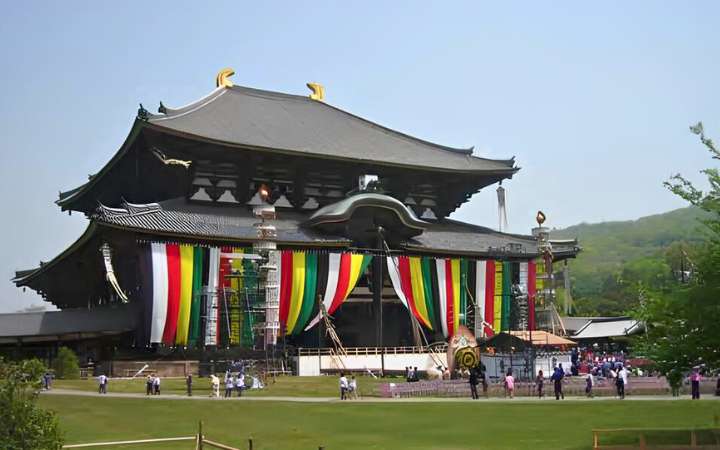
In Nara, we have a guided walk in the morning. Many of Japan’s greatest cultural treasures are concentrated in and around the city, with eight UNESCO World Heritage sites - Todai-ji Temple, Kofuku-ji Temple, Kasuga Taisha Shrine, Kasugayama Primeval Forest, Nara Palace Site, Ganko-ji Temple, Yakushi-ji Temple and Toshoda-ji Temple. Many of these sites are in or near Nara Park, home to a thousand or more free-roaming deer. We will visit two of these World Heritage sites, Kasuga Taisha Shrine and Todaiji temple -its Daibutsu-den is the largest wooden building in the world, housing a 16-metre tall image of the Rushana Buddha in bronze and gold. Prior to being rebuilt three hundred years ago, the awesome wooden structure was even larger than today. There will byakue some free time to relax, visit a Japanese garden or wander through the old town. 

  • Day
  • 8
Travel to Yoshino
  • Traditional Japanese Ryokan Inn  Ryokan (Travellers inn) 
  • Meal Breakfast, Dinner 

From Nara, our journey takes us to the ridge-top village of Yoshino, and a comfortable Ryokan. Yoshino is a UNESCO World Heritage Site and one of the most famous places in the whole of Japan for viewing cherry blossom in the spring. We will visit Yoshimizu Shrine (connected to historical figures such as Minamoto no Yoshitsune, Emperor Godaigo, and ToyotomiHideyoshi) and explore the area. 

  • Day
  • 9
Visit Atmospheric Mount Koya 
  • Traditional Japanese Ryokan Inn Shukubo (Pilgrims Lodging) 
  • Meal Breakfast, Dinner

We take the scenic train to Mount Koya, situated in a bowl-shaped valley filled with stands of cedar trees high in the mountains of the Kii Peninsula. Since the 9th century Mount Koya has been a place of religious devotion and ceremony. Today there are more than 100 monasteries, many of which have Shukubo (temple lodgings). We stay in one of the temples and dine on shojin-ryori Buddhist vegetarian cuisine. We visit Kongo-buji temple and walk through the vast Okuno-in cemetery. Tomorrow morning, there is an opportunity to rise early and join the Buddhist morning service.   

  • Day
  • 10
Transfer to Kyoto 
  • Hotel Western-style Hotel
  • Meal Breakfast

We take the train to Kyoto and check into our hotel. Kyoto was Japan’s capital for many centuries and is still regarded as the country’s cultural heart. In the evening, we enjoy a walk in Gion, Kyoto’s geisha district and there is the possibility of seeing a geiko (fully-fledged geisha) or maiko (apprentice geisha) making their way through the narrow streets. 

  • Day
  • 11
Explore the History of Kyoto
  • Hotel Western-style Hotel
  • Meal Breakfast, Farewell Dinner

There is a guided half-day walking tour this morning. We first visit the Sanjo-ohashi Bridge, the western end of the Nakasendo Trail. We continue to Nanzenji, a tranquil Zen Buddhist temple whose history dates back to the mid-13th century. We then stroll along the Philosopher’s Path, with craft shops, cafes, shrines and temples beside the clear waters of a small canal. The path ends near Ginkakuji, the Silver Pavilion. There is free time in the afternoon so you can explore the area further or shop for crafts. In the evening, there is a Farewell Dinner with your guide. 

  • Day
  • 12
Comple the Tour in Kyoto
  • Meal Breakfast 

Our tour ends today after breakfast at the hotel in Kyoto. Your guide will be on hand to offer assistance and advice for travelling to the airport if you have homeward flights, or on onward travel if you are extending your stay in Japan. 


Tour Length 

12 days 

Cost

From AUD $7,348 per person, twin share

Type and Level of Trip

Type: Guided tour with an expert bilingual guide

Technical level: Trails may be uneven at times. While they may be waymarked, a degree of map-reading and route-finding skills is recommended for a smooth experience.

Activity level: Intermediate – Our Intermediate-level tours often include multiple dedicated days of trail walking, with some days of up to six hours or more and significant ascents and/or descents.

What is Included
  • Full-time services of an English-speaking tour guide 
  • 11 nights in hotels and Japanese-style inns
  • Daily breakfast and 7 dinners 
  • All transportation between tour locations
  • Entrance to museums, temples and other sights on the group’s itinerary 
  • Forwarding of one item of luggage on 3 occasions 
What’s Not Included
  • Flights 
  • Airport transfers 
  • Drinks and meals not included in itinerary
  • Entrance fees to museums, temples etc. not mentioned in the itinerary 
  • A single room supplement for solo travelers at hotels 
Dates

2025:

  • 30/09/2025
  • 07/10/2025
  • 14/10/2025
  • 06/11/2025
  • 13/11/2025
  • 18/11/2025

2026:

  • 24/03/2026
  • 02/04/2026
  • 16/04/2026
  • 09/05/2026
  • 21/05/2026
  • 01/06/2026
  • 28/09/2026
  • 06/10/2026
  • 16/10/2026
  • 19/10/2026
  • 27/10/2026
  • 13/11/2026
  • 17/11/2026

*** Subject to availability. Please contact us for the most up-to-date availability ***

Important

Due to the rural nature of this tour, slight alterations of the itinerary are possible.

Narai Juku, Traditional wooden buildings lining a historic street in Narai-juku, a preserved Edo-period post town on the Nakasendo Trail in Nagano, Japan, surrounded by lush green
Serene view of Ginkaku-ji Temple (Silver Pavilion) in Kyoto, Japan, surrounded by lush gardens, moss-covered paths, and traditional Zen architecture – a peaceful UNESCO site on the Philosopher’s Path.
Historic stone-paved street with traditional wooden shops and houses in Tsumago-juku and Magome-juku, a scenic Edo-period post town on the Nakasendo Trail in Japan’s Kiso Valley


    I consent to receive communications by email. I understand I may opt out at any time using the unsubscribe link provided in all communications *
    We are aware of our responsibility to protect your personal data. We act in accordance with the principles introduced by applicable legal regulations and the general principle on good faith in the processing of personal data.
    We determine clearly and precisely its legitimate and lawful purpose for processing personal data and process personal data to the extent necessary and in connection with the products and services we offer.
    We transfer your personal data in compliance with applicable laws and only when it is necessary. We take required technical and administrative measures to protect your personal data and also we ensure that Data Processors take administrative and technical measures regarding data security by signing non-disclosure agreements.


    Tranquil outdoor onsen hot spring bath in Kiso-Fukushima, Japan, surrounded by snow-covered mountains and traditional ryokan – a perfect winter relaxation spot on the historic Nakasendo Trail
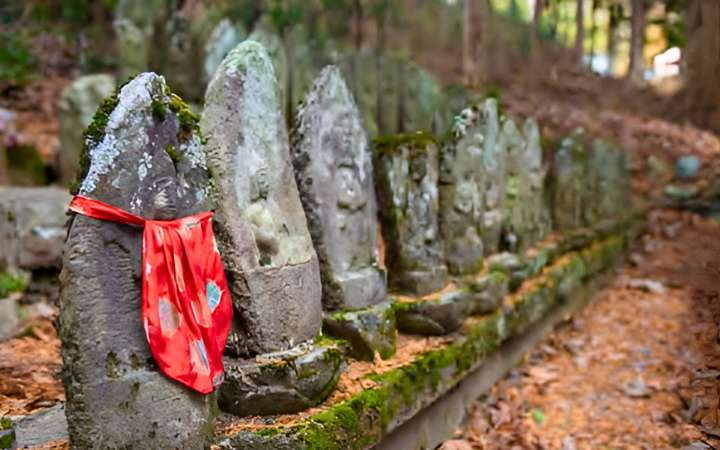
    Peaceful row of moss-covered Jizō statues along a forest trail in Japan, symbolizing protection for travelers and children – a spiritual and scenic highlight of traditional Japanese pilgrimages.
    Majestic view of Tōdai-ji Temple in Nara, Japan, home to the Great Buddha Daibutsu, surrounded by serene gardens and roaming deer – a UNESCO World Heritage Site and iconic cultural landmark.